Automation alone does not create efficient processes. Only the correct workstation design determines whether the potential of an AutoStore system can actually be realised.
An increasing number of companies are investing in modern AutoStore systems to automate their warehouse processes and increase picking performance. However, practice frequently shows that the system's efficiency does not end at the port, but only where human, material and process work together optimally.
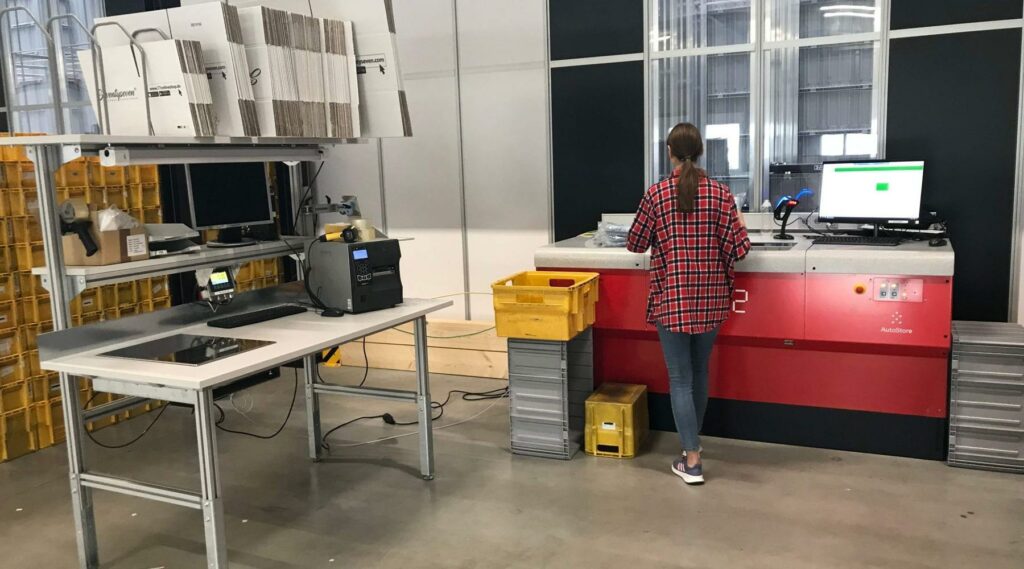
The attached examples illustrate this difference impressively.
At the first workstation, the packing bench is physically separated from the AutoStore port. Employees must constantly switch between the port and the workstation, transport boxes, perform extra handling steps, and walk unnecessary distances. Such solutions often arise when the focus is primarily on the installation of the AutoStore system, while the ergonomic and procedural design of the workstation receives too little attention.
The consequences are frequently:
- Unnecessary movements and running paths
- Higher physical strain on employees
- Additional time required per order
- Increased susceptibility to errors
- Lower overall productivity
The actual costs often do not arise from the technology itself, but from small daily inefficiencies that add up over thousands of picking and packing operations.
The workplace as part of the overall system
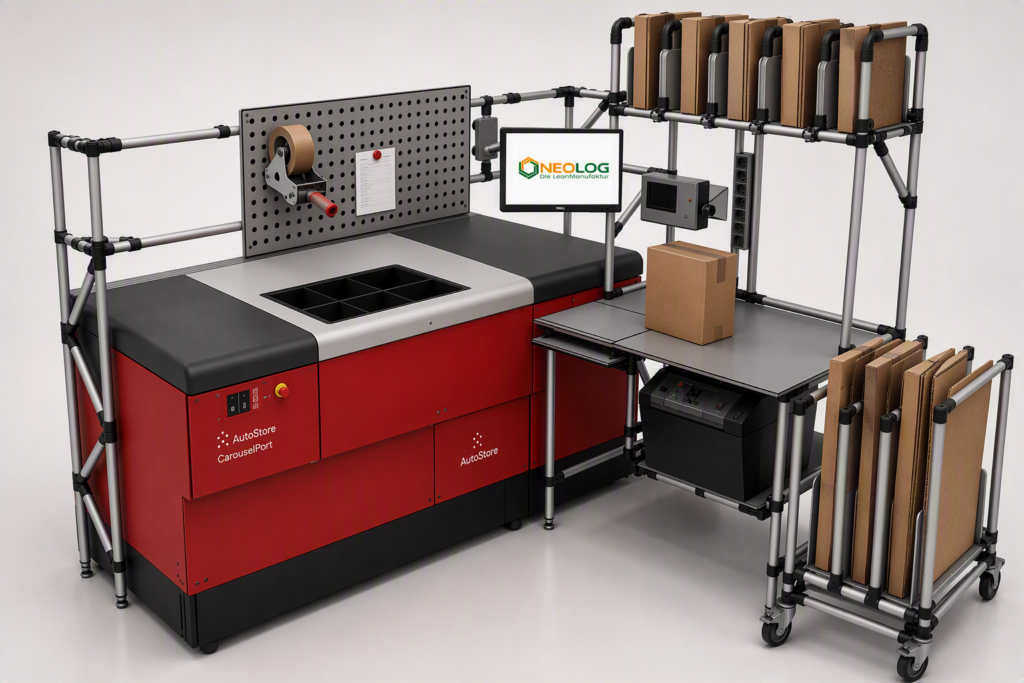
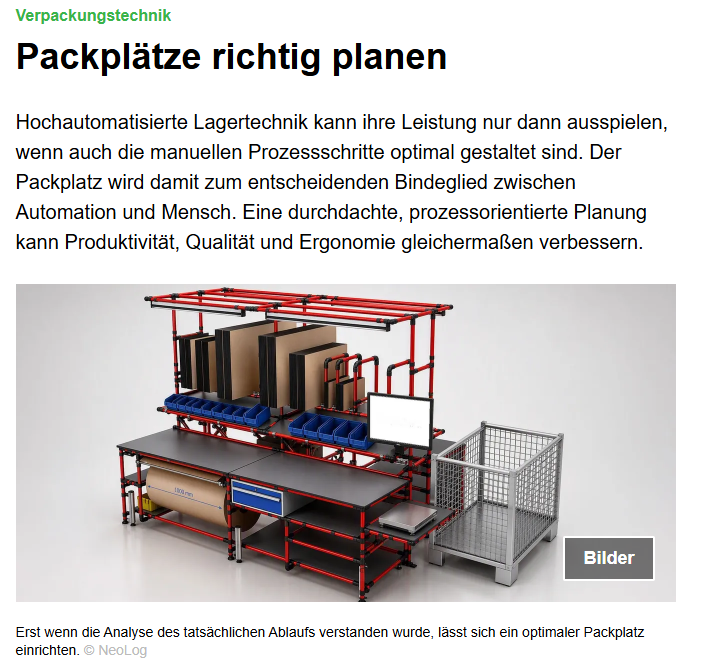
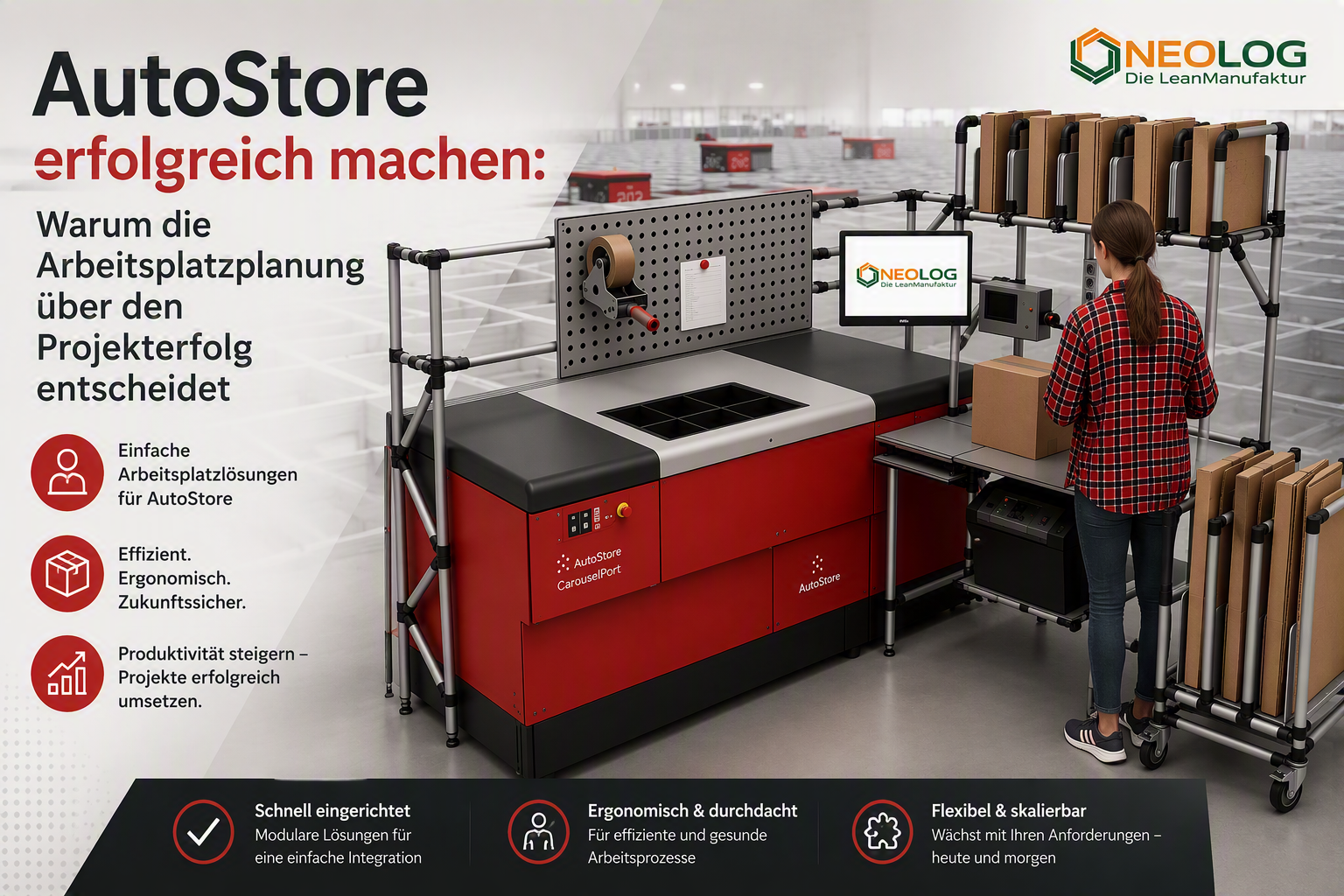
Modern intralogistics solutions must therefore be considered holistically. The second example shows an integrated AutoStore workstation that has been specifically tailored to the needs of the employees and the requirements of the shipping process.
The solution includes, among other things:
- Directly integrated weighing technology
- Ergonomic supply of cardboard boxes and packaging material
- Pallet storage at an optimal picking height
- Additional space for larger shipping boxes
- Short distances between picking, packing and dispatch
This creates a seamless flow of materials without unnecessary interruptions. Employees can concentrate on value-adding activities while search times, movements and detours are minimised.
Experience makes all the difference
Especially in AutoStore projects, it becomes clear just how important cooperation with experienced partners is. While the focus of many projects is on selecting bin sizes, the number of robots, or storage capacity, the design of the workstations is often only considered in a late project phase.
Yet it is precisely this area that determines whether the employees will accept the solution and ensures the long-term performance of the plant.
Companies such as NeoLog have been dealing with lean production, ergonomic workstations and the optimisation of logistical processes for many years. This expertise makes it possible not to view AutoStore ports in isolation, but to integrate them into a holistic logistics concept.
Conclusion
Investing in an AutoStore system is an important step on the path to automated intralogistics. However, the long-term success of a project does not depend on the technology alone.
Only through thoughtful workstation design, ergonomic processes and intelligent material flows can the full potential of the solution be realised.
Therefore, anyone planning an AutoStore system should not only automate the warehouse, but also include the entire workstation in the planning process. After all, the best technology only unfolds its true benefit when it is optimally tailored to the people who work with it every day.
NeoLog supports companies in thinking holistically about AutoStore projects and creating workspaces that equally improve productivity, ergonomics and process quality. 🚀📦